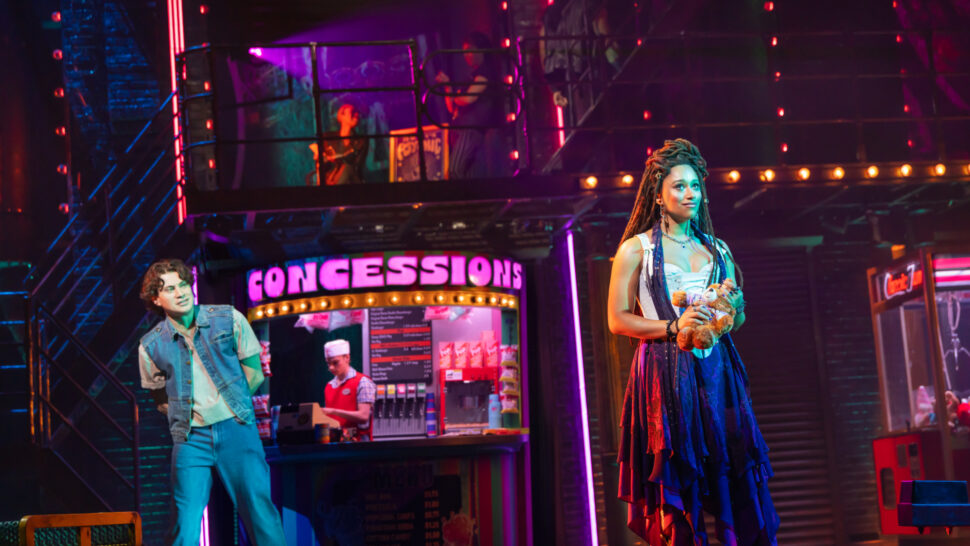
When a cult 1980s vampire film like The Lost Boys—a neon-soaked, motorcycle-riding, rock-soundtracked horror-comedy—transforms into a Broadway musical, expectations run high and skepticism looms larger. Critics were poised, pens sharpened, ready to dissect whether this stage adaptation could capture the film’s anarchic charm or simply bleed out under the spotlight. The verdict? Mixed, passionate, and surprisingly reflective of the source material’s own duality: bold style, uneven substance.
From opening night, The Lost Boys on Broadway ignited debate. Some hailed it as a thrilling, genre-bending spectacle that resurrects 80s nostalgia with theatrical flair. Others dismissed it as a flashy, confused attempt to translate cinematic cool to the stage. What emerges from the chorus of reviews is not a consensus, but a compelling portrait of a production striving—sometimes successfully—to honor its legacy.
The Critical Divide: Love at First Bite or Staked on Arrival?
Critics are split along generational and stylistic lines. Those who grew up with Corey Haim, Corey Feldman, and Edward as the ultimate trio of rebel vampires tend to view the musical through a romantic, nostalgic lens. They praise its audacity, its sonic energy, and its visual spectacle. The New York Times’ theater critic called it “a neon-drenched fever dream that knows exactly how ridiculous it is—and leans in,” applauding the show’s self-awareness and its refusal to take itself too seriously.
But not all critics found the camp endearing. The New Yorker delivered a more measured take, noting that “while the production pulses with energy, it often feels like a parade of moments rather than a story with momentum.” The review questioned whether the musical could sustain emotional weight when the original film balanced horror, humor, and heart so delicately.
This divide echoes the film’s own reception in 1987—initially shrugged off by some critics, later embraced as a cultural touchstone. The stage version seems destined for a similar path: polarizing in its early run, possibly iconic in hindsight.
Faithful to the Film—But at What Cost?
One of the most consistent threads in reviews is the production’s fidelity to the original film. Critics agree that the musical recreates key scenes with reverence: the boardwalk chase, the comic book store introduction, the infamous “You’re one of us now” moment at the vampire lair. Entertainment Weekly praised the “museum-like precision” of these recreations, calling them “a love letter to fans.”
Yet, that same fidelity draws criticism. Several reviewers argue that the show’s adherence to the film’s structure limits its theatrical potential. Deadline noted, “It feels less like a reimagining and more like a sing-along cutscene,” pointing to the pacing issues that arise when narrative transitions designed for film don’t translate smoothly to live performance.
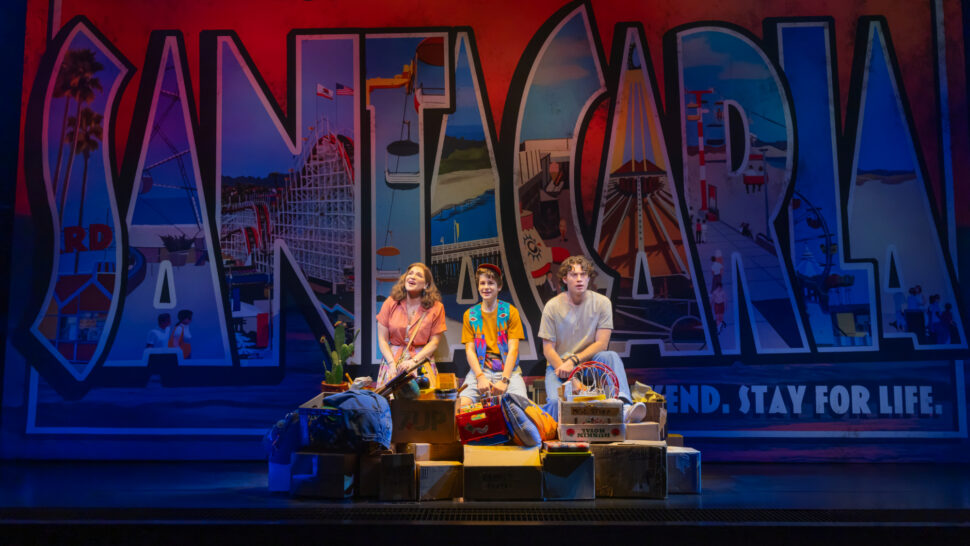
A practical example: the film’s use of montages to establish the brothers’ integration into vampire life doesn’t work as effectively on stage without inventive staging or lyrical depth. Critics argue that the musical often substitutes genuine character development with callbacks and quotations, relying on audience recognition rather than earned emotional beats.
Music and Sound: Synth-Pop Heartbeat or One-Hit Wonder?
The score—composed by a team led by Duncan Sheik (known for Spring Awakening)—is a deliberate homage to 1980s new wave and synth-pop. Critics are split on its success.
Positive reviews, like those from Rolling Stone, highlight tracks like “Forever Young (But Never Aging)” and “Blood on the Beach” as “instant cult classics,” praising their anthemic quality and clever lyrical nods. The use of a live band stationed visibly on stage—dressed as a fictional 80s band—was lauded for enhancing the concert-like atmosphere.
On the other hand, Vulture questioned the score’s originality, calling it “karaoke-level pastiche” that “evokes the era without adding anything new to it.” The critique underscores a limitation: while the music captures the vibe, it doesn’t always advance the story. In musical theater, songs should do double duty—entertain and reveal. Some critics feel The Lost Boys falls short here, especially in character-driven numbers for secondary figures like Lucy or Max.
Still, the audience response tells a different story. Reports from opening week describe standing ovations after the final number, “Lost but Never Alone,” a ballad sung by Sam (Corey Feldman’s original role) that manages to blend sincerity with synth arpeggios. Whether critics like it or not, the music is connecting.
Visuals and Staging: A Theatrical Comic Book Come to Life
Where nearly all critics agree is on the show’s visual brilliance. The production design, credited to David Korins (Hamilton, Dear Evan Hansen), transforms the stage into a kinetic, comic-book-inspired Santa Carla. Giant speech bubbles pop up during dialogue, neon signs flicker in time with the music, and flying sequences give the vampires a literal lift.
The Hollywood Reporter called it “the most visually inventive show on Broadway this season,” while Time Out New York noted that “you’ve never seen flying harnesses used so aggressively—or effectively—in a musical.”
The use of projection mapping and practical effects (including fake blood bursts timed to drum hits) has been widely praised. One common workflow tip emerging from theater analysts: the show’s success leans heavily on technical precision. A single misfire in the flying rigs or lighting cues could break the illusion—a risk the production manages to avoid night after night.
However, some critics argue that the spectacle occasionally overshadows the story. As The Guardian observed, “It’s easy to get lost in the light show and forget there’s a narrative thread struggling to hold on.”
Casting and Performances: Who Bit It and Who Blew It?
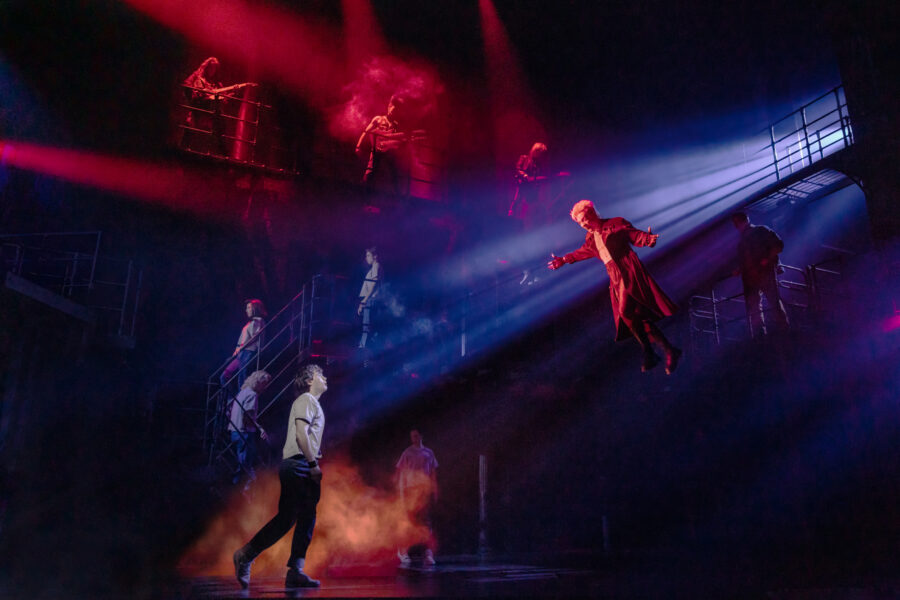
Casting a musical based on an iconic film is always a minefield. Critics have been generally positive about the leads, particularly the actor playing David—the charismatic vampire leader. His rendition of “Leader of the Pack (of the Undead)” earned raves for its vocal control and seductive menace.
Michael Emerson, reprising his film role of Max the store owner (and secret head vampire), drew mixed reactions. While his stage presence is undeniable, some reviewers felt the musical gives him less room to explore the tragic irony of his character. “Max’s arc feels truncated,” wrote Variety, “like a subplot sacrificed for a dance number.”
The younger cast members—playing Michael, Sam, and Star—received praise for their energy and vocal precision, though a few critics noted that the emotional depth required for their dramatic turns (especially Michael’s transformation) wasn’t always fully realized. As one reviewer put it: “They can sing and dance, but can they break your heart when it matters?”
What Fans and Critics Are Missing
An underreported angle in most reviews? The show’s deliberate embrace of queer subtext. The original film was long interpreted as an allegory for sexuality and belonging, and the musical amplifies this through choreography, costuming, and vocal stylings. Critics who focus solely on nostalgia or spectacle often overlook this layer.
Theatrical analysts point out that David’s coven functions as a found family—a theme with deep resonance in LGBTQ+ communities. The choreography, particularly in ensemble numbers like “Forever Night,” leans into ballroom and vogue influences, adding cultural texture that goes beyond retro pastiche.
This subtext may not be explicit in the script, but it’s woven into the production’s DNA. Future reviews may revisit The Lost Boys through this lens, especially as audiences respond emotionally to its themes of identity and acceptance.
Final Verdict: A Flawed Gem with Fangs
So, what do critics really think?
They see The Lost Boys on Broadway as a bold, imperfect experiment—one that stumbles in narrative cohesion and lyrical depth but soars in visual invention and emotional nostalgia. It’s not a flawless masterpiece, but it’s rarely boring. For fans of the film, it’s a must-see, even with its flaws. For theater purists, it may feel like style over substance.
The show’s staying power will likely depend on word-of-mouth and its ability to evolve. Early reports suggest rewrites are already in progress, particularly for Act Two, which several critics found sluggish.
If you’re deciding whether to see it, consider this: The Lost Boys isn’t trying to be Hamilton or The Phantom of the Opera. It’s trying to be a loud, proud, theatrical version of a midnight movie. And on those terms, many critics concede—it delivers.
In Short: Should You See It?
Yes—but with tempered expectations. Go for the spectacle, the music, and the thrill of seeing a cult classic reborn. Stay for the moments when the show transcends imitation and finds its own heartbeat. Just don’t expect a flawless narrative. This is theater with fangs: thrilling, messy, and unapologetically alive.
Frequently Asked Questions
Is The Lost Boys on Broadway a direct remake of the movie? Yes, the musical closely follows the film’s plot, including major scenes and dialogue, though it expands some musical numbers and character moments.
Are any original cast members involved? Corey Feldman served as a creative consultant, and Michael Emerson reprises his role as Max on stage.
How is the music received by critics? Reactions are mixed—praised for its 80s vibe and energy, but some critics find it derivative and lacking in narrative depth.
Is the show appropriate for children? Despite its teen protagonists, the musical contains moderate violence, horror themes, and mature content. Recommended for ages 13+.
Does the stage version include the famous “Losing My Religion” scene? No—REM’s song wasn’t in the original film score. The musical uses original songs in that iconic moment.
How long is the runtime? Approximately 2 hours and 20 minutes, including one intermission.
Where is the show playing? It’s currently running at the Neil Simon Theatre on Broadway, with plans for a national tour in 2025.
FAQ
What should you look for in What Critics Say About The Lost Boys on Broadway? Focus on relevance, practical value, and how well the solution matches real user intent.
Is What Critics Say About The Lost Boys on Broadway suitable for beginners? That depends on the workflow, but a clear step-by-step approach usually makes it easier to start.
How do you compare options around What Critics Say About The Lost Boys on Broadway? Compare features, trust signals, limitations, pricing, and ease of implementation.
What mistakes should you avoid? Avoid generic choices, weak validation, and decisions based only on marketing claims.
What is the next best step? Shortlist the most relevant options, validate them quickly, and refine from real-world results.


:max_bytes(150000):strip_icc():focal(749x0:751x2)/michael-jackson-Jafar-Jackson-tout-021424-09f2c7134c534740807a7033577a917a.jpg)


