
Machines don’t forget. They don’t warn. And they don’t forgive. A single misstep during maintenance—like failing to disable a press or overlooking a live circuit—can lead to amputations, electrocution, or death. That’s where lockout tagout locks and tags come in. They’re not just accessories to a safety program; they’re the backbone of energy control in industrial environments.
Despite widespread regulations, OSHA still cites improper lockout tagout (LOTO) procedures among the top 10 workplace safety violations—year after year. The root cause? A lack of consistent enforcement, poor training, or substandard equipment. This article breaks down how to deploy lockout tagout locks and tags effectively, what types exist, and where most programs fail.
What Are Lockout Tagout Locks and Tags?
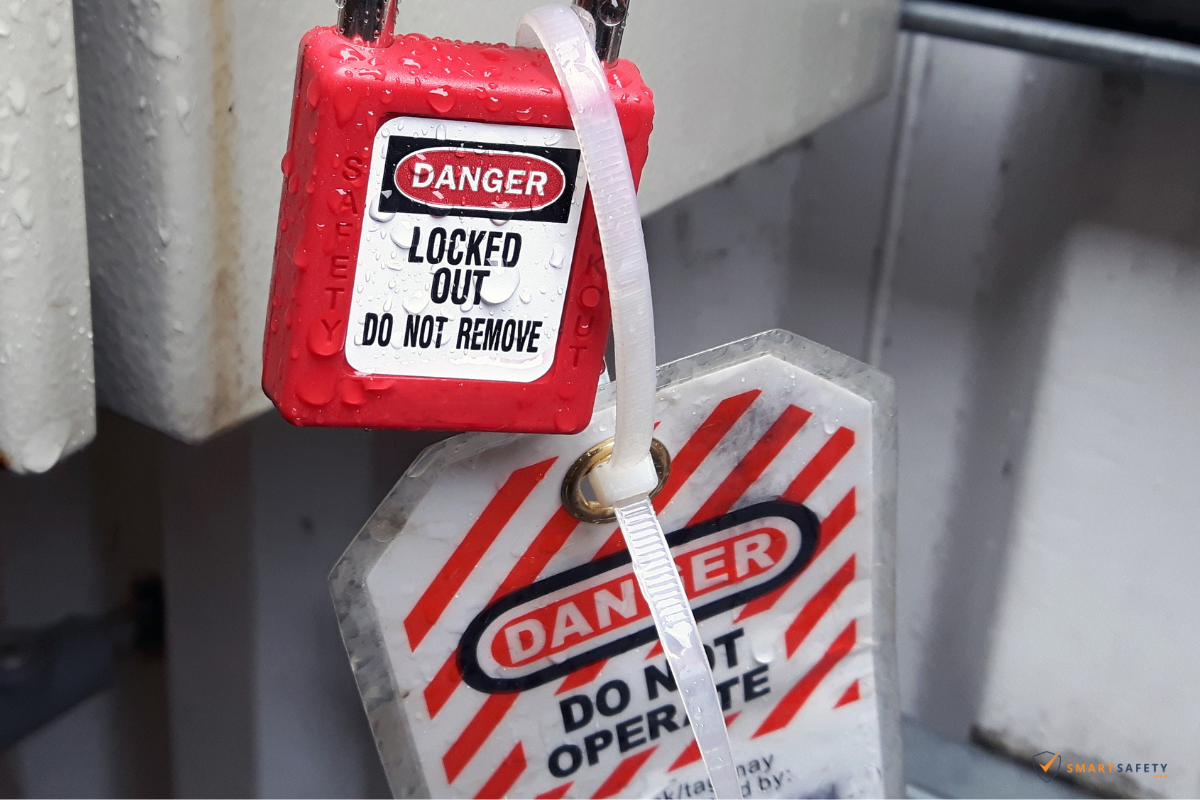
Lockout tagout (LOTO) is a safety procedure used to ensure that dangerous machines are properly shut off and cannot be restarted before maintenance or servicing is complete. The "lock" physically prevents energy isolation devices from being operated. The "tag" communicates critical information: who locked the device, when, and why.
Together, locks and tags create a visible, physical barrier to accidental energization. OSHA standard 29 CFR 1910.147 outlines strict requirements for LOTO programs, making them mandatory across manufacturing, utilities, construction, and even commercial facilities with heavy equipment.
Core Components of a LOTO System
- Locks: Physical padlocks, valve locks, circuit breaker locks, or hasps that prevent equipment startup.
- Tags: Durable labels with fields for name, date, department, and hazard description.
- Group Lockout Devices: Hasps or brackets allowing multiple workers to apply individual locks.
- Energy Isolation Points: Disconnects, breakers, valves, or other control points where locks are applied.
Without these components, a LOTO program is incomplete—and potentially non-compliant.
Why Lockout Tagout Procedures Fail in Practice
Even with proper equipment, LOTO programs fail due to human and systemic flaws. Consider these common breakdowns:
1. Solo Maintenance Without Lockout A technician bypasses lockout because “it’s just a quick fix.” In 2022, a worker in Ohio died after clearing a conveyor jam without locking out the drive motor. The incident took 18 seconds from start to fatality.
2. Tag-Only Systems on Isolatable Equipment Tags alone aren’t sufficient when energy can be isolated. OSHA allows tags only if locks can’t be used—but too often, tags become a lazy substitute for locks, removing the physical barrier.
3. Generic or Illegible Tags Tags with blank fields, faded text, or no worker ID create confusion. In one plant, three technicians used identical handwritten tags—none listed names. Who removed the lock? No one could say.
4. Master Keys and Shared Locks A master key that unlocks any LOTO padlock defeats the entire purpose. Each worker must have their own lock, under their control, with no override.
5. No Verification of Zero Energy Locking a breaker doesn’t guarantee the circuit is dead. Proper procedure includes testing for zero energy—using a voltage tester, bleed valves, or other methods—after lockout.
These aren’t edge cases. They’re daily realities in under-resourced or poorly trained environments.
Types of Lockout Tagout Locks: Matching the Hazard
Not all locks are created equal. Selecting the right lock depends on the energy source and environment. Here are the most common types:
Padlocks (Standard & Safety-Specific)
- Use Case: Electrical panels, disconnect switches
- Features: Key-retaining (key can’t be removed when locked), weather-resistant, color-coded
- Tip: Use employee-specific locks. Never share.
Valve Lockout Devices
- Use Case: Pneumatic, hydraulic, gas, or steam lines
- Types: Ball valve locks, gate valve locks, lever locks
- Example: A chemical plant uses gate valve locks on chlorine lines. Each lock is red and tagged with hazard class.
Circuit Breaker Locks
- Use Case: Electrical panels with breakers
- Designs: Slide-on, wrap-around, or bolt-on models
- Limitation: Must match breaker size and panel configuration
Plug Lockout Devices
- Use Case: Equipment with male electrical plugs
- Function: Encloses the plug so it can’t be inserted
- Common In: Maintenance bays for portable grinders, drills
Hasps and Group Lockout Stations
- Use Case: Multi-person maintenance (e.g., boiler servicing)
- How It Works: A hasp is placed on an isolation point; each worker applies their lock. Work can’t resume until all locks are removed.
Choosing the wrong lock can leave a critical energy source unsecured. Always audit your equipment types and match locks accordingly.
A tag without information is worse than useless—it’s misleading. OSHA requires tags to include at least:
- Employee name
- Date applied
- Reason for lockout
- Department or shift
Best-in-class tags go further. They use:
- Durable materials: Polyester or laminated paper that resists grease, moisture, and tearing
- Pre-printed warnings: “Do Not Operate,” “Under Maintenance,” “Danger – High Voltage”
- Barcodes or QR codes: For digital logging and tracking
- Dual-language support: Critical in multilingual workplaces
One automotive plant reduced LOTO errors by 60% after switching to waterproof, scannable tags. The digital trail allowed supervisors to verify lockout status remotely—no more guessing.
Implementing a LOTO Program: 5 Steps That Work
A compliant LOTO program isn’t just about buying locks and tags. It’s a documented, trained, and audited process.
Step 1: Conduct an Energy Control Audit Walk through every machine. Identify all energy sources: electrical, hydraulic, pneumatic, gravitational, chemical. Map isolation points.
Step 2: Develop Machine-Specific Procedures One-size-fits-all doesn’t work. A CNC mill requires different steps than a boiler. Procedures should list: - Shutdown sequence - Isolation points - Lock/tag placement - Zero-energy verification method - Re-energization steps
Step 3: Train and Certify Employees Authorized employees (those who perform LOTO) and affected employees (those who operate equipment) need different training. Authorized workers must demonstrate hands-on competence—not just pass a quiz.

Step 4: Equip with Correct Locks and Tags Color-code locks by department or energy type. Use standardized tags. Store kits in labeled, accessible lockout stations.
Step 5: Audit Annually OSHA requires annual inspections. But proactive companies audit quarterly. Watch real workers perform LOTO. Correct deviations immediately.
Real-World Example: How a Brewery Prevented Disaster
A craft brewery in Colorado had a near-miss when a technician entered a fermenter without lockout. The agitator started automatically on a timed cycle. He escaped with minor injuries—but the system failed.
After review, they found: - No written LOTO procedure for fermenters - Tags were photocopied and reused - Valve locks didn’t fit the agitator motor
They rebuilt their LOTO program: - Created machine-specific procedures for all tanks - Installed universal valve lockouts that fit all motors - Introduced digital tag logging via tablets
Six months later, during an audit, a supervisor found a locked fermenter with no tag. The worker was traced via lock ID, retrained, and the system proved its value.
Top 5 Lockout Tagout Locks and Tags Kits
Choosing the right equipment matters. Here are five trusted options for different environments:
| Product | Best For | Key Features | Limitations |
|---|---|---|---|
| Master Lock 1495DAT | Electrical & General Use | 10-piece kit, hasp, tags, breaker lock | Limited valve coverage |
| Grainger 4Z920 | Heavy Industrial | Durable steel hasps, weatherproof tags | Higher cost |
| DEWALT DWMT73557 | Construction Sites | Compact, rugged case, universal fit | Fewer specialty locks |
| Seton 65193-5 | Chemical Plants | Corrosion-resistant, bilingual tags | Requires customization |
| Brady BPB14 | High-Regulation Facilities | Barcode-enabled tags, audit-ready | Steeper learning curve |
These kits aren’t one-size-fits-all. Match them to your facility’s hazards, workforce size, and regulatory needs.
Common Mistakes and How to Avoid Them
Even experienced teams make errors. The most frequent include:
- Using Personal Locks for Non-LOTO Tasks
- A mechanic uses his LOTO padlock to secure a toolbox. When needed for lockout, it’s missing. Solution: Issue separate locks for personal use.
- Leaving Locks On Indefinitely
- A worker goes on vacation, and their lock stays on. OSHA allows removal under specific procedures—but only after verification that the worker won’t return. Have a removal policy.
- Skipping Group Lockout Protocols
- On multi-person jobs, one worker removes their lock and assumes others are done. Chaos follows. Use a primary authorized employee to coordinate removal.
- Poor Tag Placement
- Tags get lost behind panels or buried under insulation. Tags must be visible and secured to the lock or hasp.
Closing: Make Lockout Tagout Unavoidable
Lockout tagout locks and tags aren’t just compliance items. They’re life-saving tools that demand respect, consistency, and vigilance. The best programs don’t rely on memory—they build systems where safety is the only path forward.
Start by auditing one high-risk machine. Write its LOTO procedure. Train the team. Then scale. Use durable locks and tags. Enforce accountability. Audit relentlessly.
When a worker sees a lock on a valve, they shouldn’t wonder if it’s safe. They should know—because the system never lets up.
Frequently Asked Questions
What’s the difference between a lock and a tag in LOTO? A lock physically prevents equipment from being energized. A tag provides information about the lockout, including who applied it and why.
Can you use a tag without a lock? Only if a lock can’t be used. OSHA allows tag-only systems in limited cases, but they require additional safety measures.
Who can remove a LOTO lock? Only the employee who applied it. In their absence, a formal removal procedure must be followed under supervision.
Are LOTO locks color-coded? Yes, often by department or energy type. Red is common for danger, but colors should follow internal policy.
Do LOTO tags need to be bilingual? Not required by OSHA, but highly recommended in multilingual workplaces to ensure understanding.
How often should LOTO procedures be reviewed? Annually, per OSHA. High-risk or incident-prone areas should be reviewed more frequently.
Can one lock secure multiple energy sources? No. Each isolation point must be locked out individually, unless a group lockout device like a hasp is used.
FAQ
What should you look for in Lockout Tagout Locks and Tags: Safety That Saves Lives? Focus on relevance, practical value, and how well the solution matches real user intent.
Is Lockout Tagout Locks and Tags: Safety That Saves Lives suitable for beginners? That depends on the workflow, but a clear step-by-step approach usually makes it easier to start.
How do you compare options around Lockout Tagout Locks and Tags: Safety That Saves Lives? Compare features, trust signals, limitations, pricing, and ease of implementation.
What mistakes should you avoid? Avoid generic choices, weak validation, and decisions based only on marketing claims.
What is the next best step? Shortlist the most relevant options, validate them quickly, and refine from real-world results.

:max_bytes(150000):strip_icc():focal(749x0:751x2)/michael-jackson-Jafar-Jackson-tout-021424-09f2c7134c534740807a7033577a917a.jpg)